



Chevrolet Fleet Buying Checklist for Honolulu Businesses
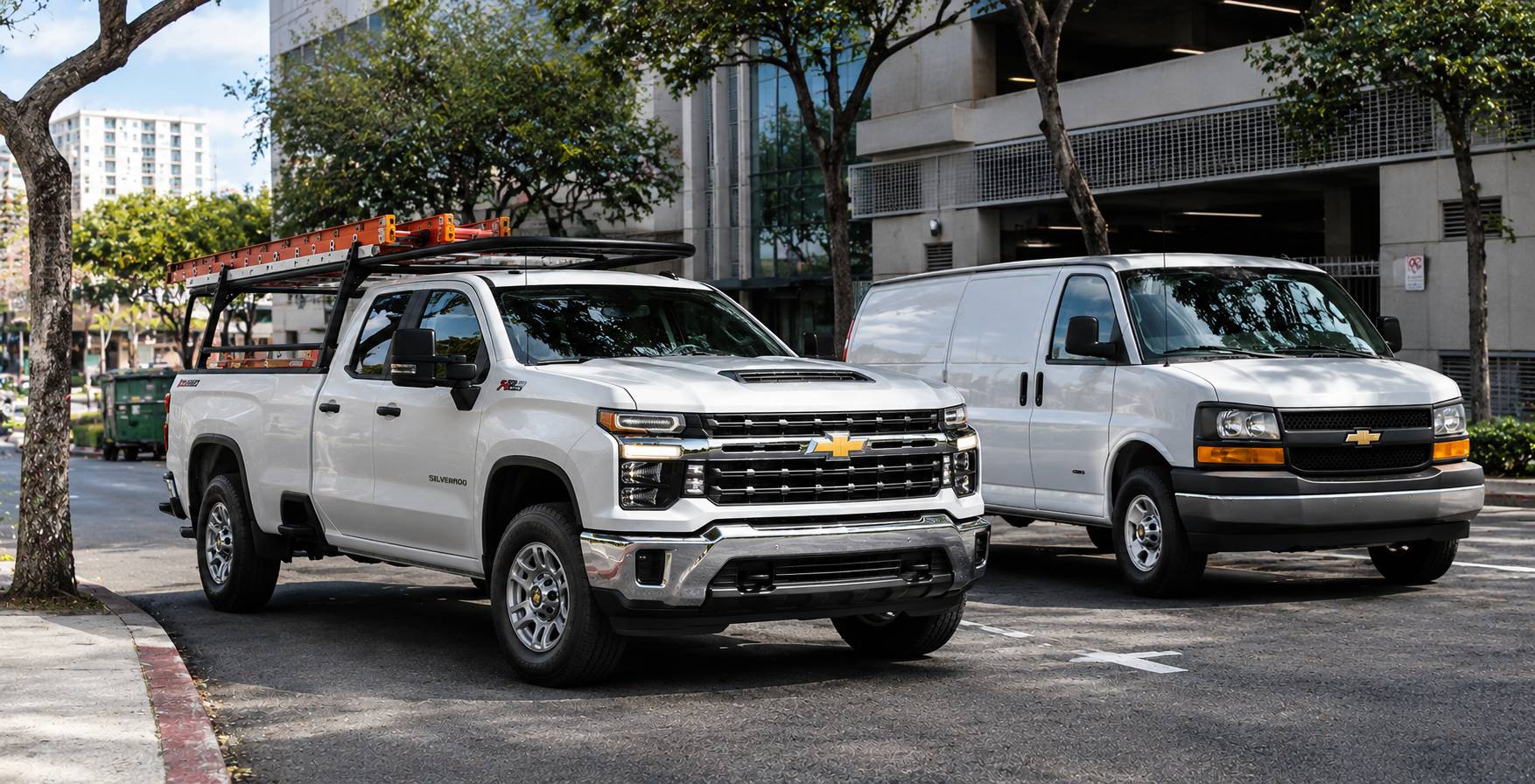
Choosing a commercial vehicle is about more than finding a truck with enough power or a van with enough cargo space. The vehicle needs to match your business's daily work, fit the places your team travels, and support the equipment you use.
For businesses operating in Honolulu and across Oahu, traffic, loading access, parking restrictions, and equipment requirements can make vehicle selection especially important.
At Cutter Chevrolet, we help business owners explore Chevrolet commercial vehicles through our Commercial & Fleet Department in Honolulu. Whether you're shopping for a pickup, cargo van, or specialized work truck, this checklist can help you narrow your options.
1. Identify What Your Business Vehicle Must Carry
Start with the work rather than the vehicle model.
A contractor transporting tools has different needs from a delivery company carrying packaged goods. A maintenance business might prioritize secure equipment storage, while a landscaping company may prefer an open bed.
Before shopping, write down:
- Your typical cargo and equipment
- The combined weight of passengers, tools, and materials
- How frequently you transport heavy loads
- Whether your team needs enclosed or open storage
- Any towing requirements
- The number of employees who regularly travel together
This information helps determine whether a pickup, cargo van, or specialized commercial truck makes more sense.
Practical tip: Calculate the weight of your normal working load, not just your heaviest individual piece of equipment. Payload limits account for passengers and cargo, including equipment added to the vehicle.
2. Compare Chevrolet Commercial Vehicle Options
Our Commercial & Fleet Department supports businesses looking for Chevrolet trucks, vans, utility bodies, flatbeds, box trucks, and custom-ordering options.
Different vehicle types solve different business problems.
| Vehicle type | Potential business use | What to evaluate |
|---|---|---|
| Silverado 1500 | General contracting, maintenance, lighter equipment transport | Bed size, payload, towing requirements |
| Silverado HD models | Heavier work equipment and trailer applications | Vehicle ratings, configuration, operating requirements |
| Express Cargo Van | Deliveries, service equipment, enclosed tool storage | Interior dimensions, loading access, shelving |
| Silverado chassis cab | Utility bodies, flatbeds, specialized commercial applications | Upfit compatibility, combined weight, chassis specifications |
| Chevrolet SUVs | Business passenger transportation and mixed-use travel | Seating, cargo room, passenger needs |
Actual vehicle capabilities depend on the model year, drivetrain, configuration, and installed equipment.
Rather than assuming one model can handle every task, compare the specifications of the exact vehicle you're considering.
3. Consider How Honolulu Conditions Affect Your Choice
A vehicle that works well on a spacious mainland job site may be less convenient in a crowded Honolulu loading area.
Parking and maneuverability
Think about where your employees park throughout the workday.
A longer pickup or commercial van may require more turning space. If your team regularly visits downtown Honolulu, parking garage entrances and loading areas deserve attention.
Measure:
- Available parking length and width
- Garage entrance clearance
- Loading-area dimensions
- Space required to open doors or unload equipment
Frequent stops and city traffic
Delivery and service vehicles may spend considerable time stopping, idling, and maneuvering through traffic.
Consider visibility, ease of entry and exit, and how accessible cargo will be during frequent stops.
Equipment security
For businesses transporting tools, enclosed cargo storage or secure storage accessories may be worth considering.
An open pickup bed can be useful for bulky materials, but smaller equipment may need additional protection.
4. Understand Payload, Towing, and Vehicle Ratings
Two trucks that look similar may have different working capabilities.
Before making a purchase, understand these terms:
Payload capacity: The maximum allowable weight the vehicle can carry, including passengers, cargo, and added equipment.
Towing capacity: The maximum trailer weight permitted for a particular vehicle configuration under applicable conditions.
Gross Vehicle Weight Rating (GVWR): The manufacturer's maximum allowable loaded weight of the vehicle.
Gross Combined Weight Rating (GCWR): The maximum allowable combined weight of the loaded vehicle and trailer, where applicable.
If your business needs to tow equipment, consider more than the trailer's empty weight. The weight of the loaded trailer, trailer tongue or pin weight, passengers, and equipment all matter.
Consult the manufacturer's towing and payload information for the exact configuration. Do not rely on the highest advertised towing figure for a model family.
5. Decide Whether Your Vehicle Needs an Upfit
An upfit is a modification or specialized body that prepares a commercial vehicle for a particular job.
Common examples include:
- Cargo van shelving
- Interior partitions
- Tool storage
- Utility bodies
- Equipment racks
- Flatbed configurations
Our commercial department discusses vehicles and custom-ordering options for different business applications.
However, not every upfit is compatible with every chassis.
Before selecting equipment, check how the installation affects usable payload, vehicle dimensions, and any applicable manufacturer requirements.
Businesses should also confirm who will perform the installation, what warranties apply, and whether additional safety equipment is required.
6. Plan for Maintenance Before Adding Vehicles
Maintenance is an important consideration when selecting a vehicle that your business will rely on regularly.
At our Chevrolet Service Center, we provide maintenance and repair services for Chevrolet vehicles.
These include oil changes, brake service, battery service, and other vehicle maintenance needs.
Before choosing a commercial vehicle, consider:
- The manufacturer's recommended maintenance schedule
- How heavily the vehicle will be used
- The availability of replacement parts
- Where the vehicle will be serviced
- How your business will manage work when a vehicle needs repairs
For example, a vehicle making frequent short trips may have different maintenance demands from one regularly transporting heavy loads.
Our Chevrolet service information can help you explore the maintenance services available at our Honolulu location.
Fleet-specific maintenance arrangements, appointment availability, and service eligibility should be confirmed with our team.
7. Compare the Full Cost of Operating the Vehicle
The purchase itself is only one part of your business's transportation expense.
When comparing commercial vehicles, review the ongoing costs you expect to incur.
| Expense | Questions to ask |
|---|---|
| Fuel or electricity | How far will the vehicle travel during a typical workweek? |
| Maintenance | What routine services will this configuration require? |
| Insurance | What coverage does your business need? |
| Tires | Will frequent heavy loads affect replacement needs? |
| Upfits | What equipment must be installed before the vehicle enters service? |
| Financing | How will the repayment structure affect business cash flow? |
| Replacement planning | How long do you expect to retain the vehicle? |
If financing is part of your plan, ask our team about available options and what information may be needed for a commercial vehicle purchase.
Our dealership has a Finance Department, although business-specific lending eligibility and terms must be discussed individually.
For larger operations, it may also help to establish a written vehicle replacement policy based on maintenance history, usage, and operating needs.
8. Prepare for Your Commercial Vehicle Consultation
You don't need to have every specification figured out before speaking with a commercial vehicle representative.
However, bringing the right information can make the discussion more productive.
Prepare a short description of:
- Your business and its typical transportation needs
- The equipment or materials the vehicle must carry
- Any required towing capacity
- Parking or size restrictions
- Preferred vehicle body style
- Specialized equipment or upfit requirements
- Whether you're replacing one vehicle or planning a larger fleet
If you're considering a particular Chevrolet model, bring the model name and any preferred configuration details.
This gives our commercial department a clearer starting point when discussing appropriate options.
Explore Commercial Chevrolet Vehicles at Cutter Chevrolet
Choosing a business vehicle is easier when you start with the work it needs to perform.
At Cutter Chevrolet, we offer a dedicated Commercial & Fleet Department for businesses exploring Chevrolet work vehicles, including pickups, cargo vans, and specialized commercial configurations.
We're located at 711 Ala Moana Blvd, Honolulu, HI 96813.
Explore our Chevrolet commercial and fleet vehicles to learn about the options we support.
Our team can help you discuss your business's vehicle requirements, available configurations, and next steps for selecting a Chevrolet commercial vehicle.
Categories:
New Inventory