



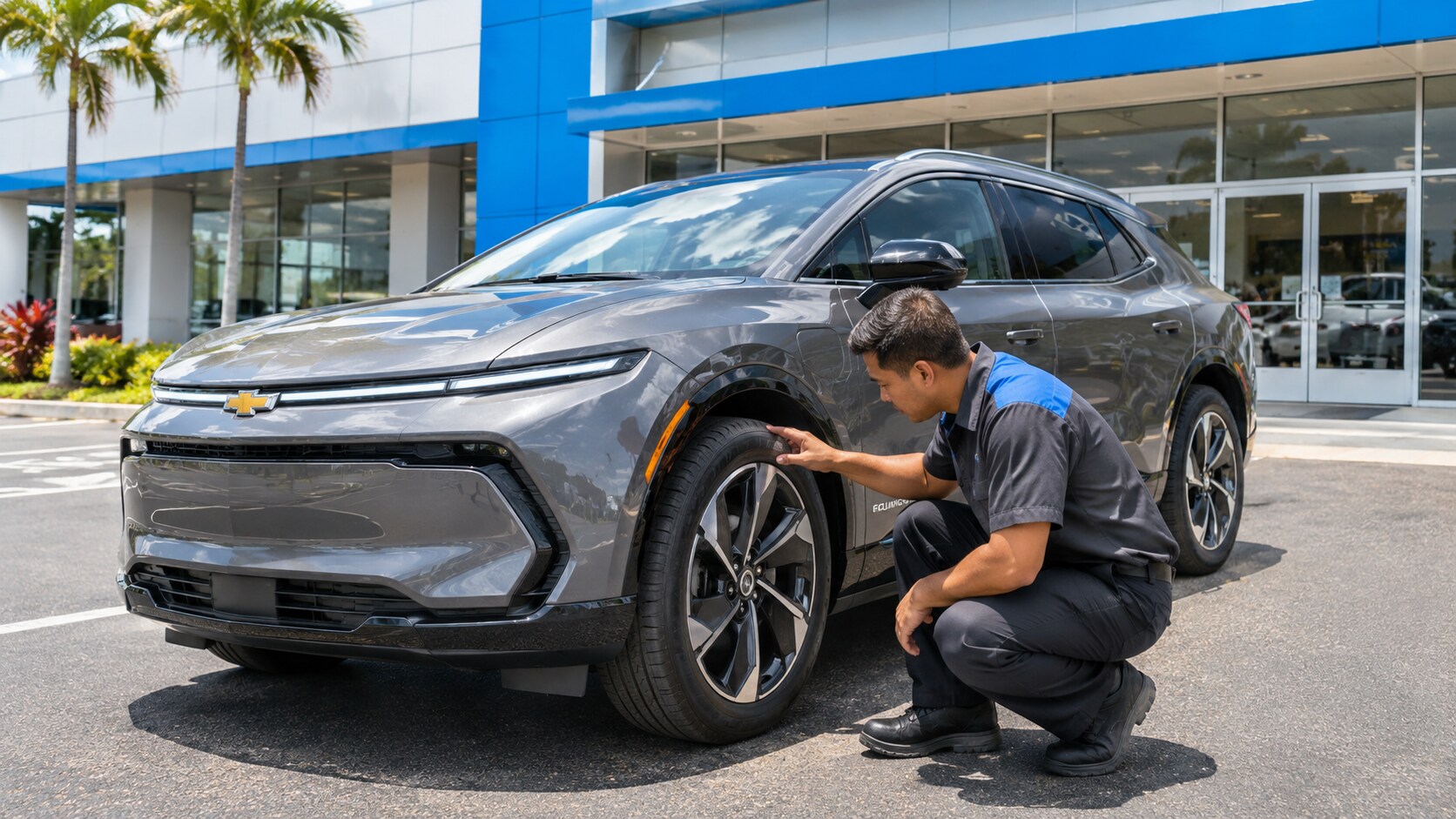
Electric Chevrolet vehicles don't need oil changes, but their tires still need regular attention. Whether you drive an Equinox EV, Blazer EV, or Silverado EV, maintaining the correct tire pressure and checking for uneven wear can help protect handling, driving efficiency, and tire life.
At Cutter Chevrolet, we help Honolulu drivers stay on top of Chevrolet maintenance. If you're new to electric vehicles, understanding how tire care differs from a gasoline-powered vehicle is a useful place to start. Here's what to watch for and when to arrange professional service.
Why Tire Maintenance Matters for Chevrolet EVs
Electric vehicles share many tire-maintenance needs with gasoline-powered cars and trucks. However, their weight and acceleration characteristics can place different demands on the tires.
EV battery packs add substantial weight, and electric motors can deliver torque quickly. Depending on the vehicle, tires, driving style, and road conditions, these characteristics may contribute to faster or uneven tread wear.
That doesn't mean every EV will wear through tires unusually quickly. Proper tire selection, inflation, rotation, and alignment all influence how long a set lasts.
Tire condition also affects electric driving range. Underinflated tires increase rolling resistance, meaning the vehicle may need more energy to travel the same distance. Keeping tires properly maintained helps your Chevrolet EV perform as intended.
How Often Should You Check EV Tire Pressure?
We recommend checking your tire pressure at least once a month, even when your Chevrolet has a tire pressure monitoring system (TPMS).
TPMS alerts are useful, but they're not a substitute for checking each tire with a reliable pressure gauge. A tire can be below its recommended pressure before a dashboard warning appears.
Use the Correct Pressure for Your Vehicle
The recommended tire pressure is listed on the Tire and Loading Information label, normally located on the driver's doorjamb. You can also consult your vehicle's owner's manual.
Don't use the maximum pressure printed on the tire's sidewall as your inflation target. That number is not necessarily the correct operating pressure for your vehicle.
For an accurate reading, check pressure when the tires are cold, ideally before driving or after the vehicle has been parked for at least three hours.
If one tire repeatedly loses pressure, have it inspected. Adding air may temporarily correct the reading, but it won't resolve a puncture, damaged valve, or other source of air loss.
What About Honolulu's Weather?
Honolulu's warm conditions make it easy to forget that tire pressure still changes with temperature. Daily driving also heats the tires, which affects pressure readings.
That's why it's important to follow the manufacturer's cold-tire pressure recommendation rather than releasing air simply because a tire shows a higher reading after driving.
Regular pressure checks are especially useful if your EV spends long periods parked outdoors or you frequently travel with passengers and equipment.
When Should Chevrolet EV Tires Be Rotated?
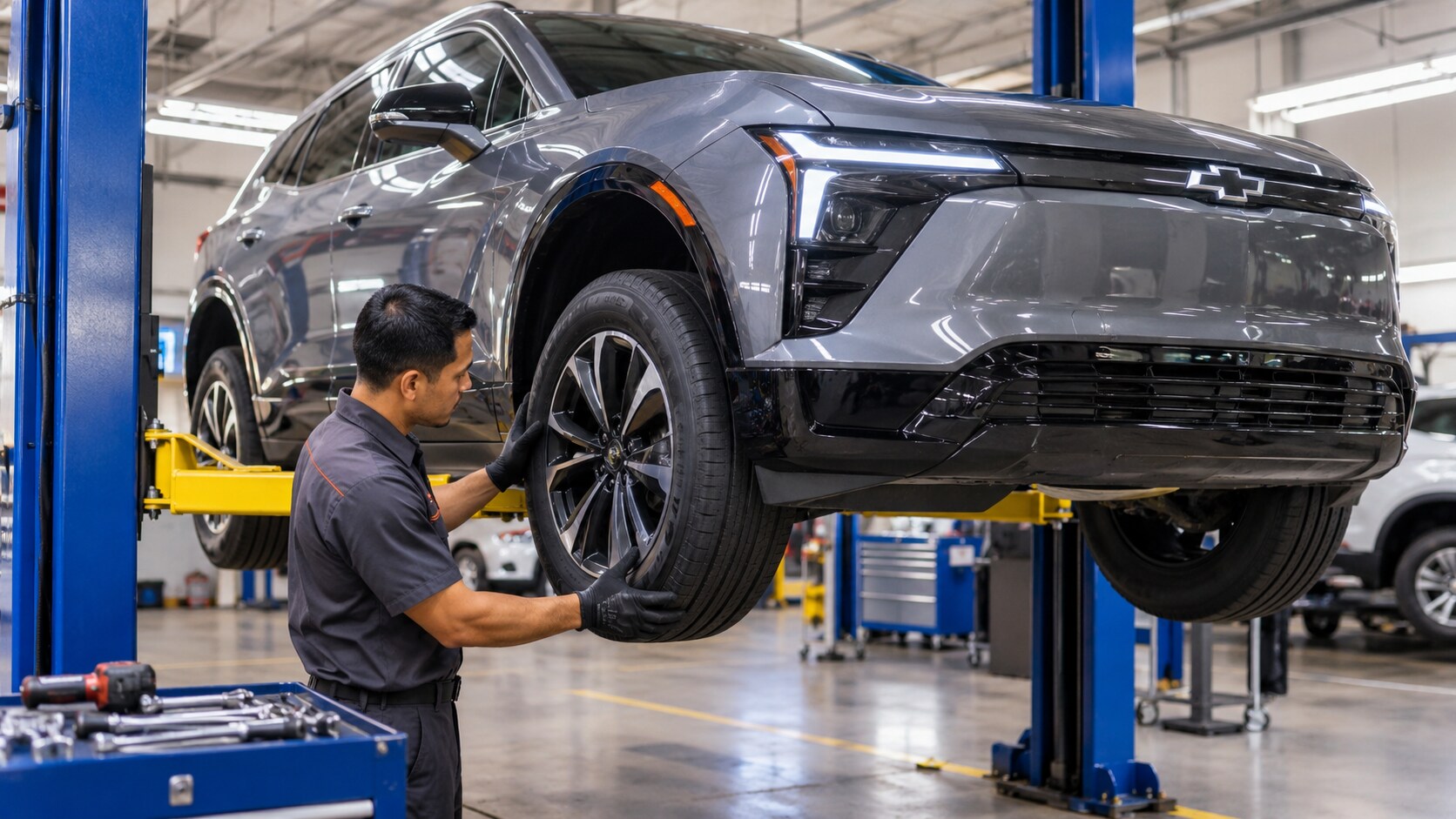
Chevrolet's general EV maintenance guidance recommends tire rotation approximately every 7,500 miles, unless the specific owner's manual calls for a different schedule.
Rotating tires helps distribute wear more evenly. Front and rear tires can experience different demands from steering, braking, acceleration, and vehicle weight distribution.
However, not every wheel and tire configuration allows the same rotation pattern. Some vehicles have different front and rear tire sizes, while certain tires have directional requirements.
Always follow the instructions for your exact Chevrolet model, model year, and wheel configuration.
| Chevrolet EV | What to Check Before Rotation |
|---|---|
| Equinox EV | The owner's manual schedule, installed tire sizes, and permitted rotation pattern |
| Blazer EV | Model-specific tire configuration and rotation instructions |
| Silverado EV | Tire dimensions, load requirements, and the approved rotation procedure |
These are inspection considerations, not separate mileage schedules. The vehicle's own maintenance documentation determines the correct interval and procedure.
If you notice unusual tread wear before the next scheduled rotation, don't wait for the mileage interval. An inspection may identify pressure, alignment, or tire problems that need attention sooner.
Signs Your EV Tires May Be Wearing Unevenly
Not all tire wear is immediately noticeable from the driver's seat. A vehicle can still feel normal while its tires develop patterns that deserve attention.
During a routine inspection, look across the entire visible tread surface and compare the tires with one another.
| What You Notice | Possible Explanation |
|---|---|
| More wear near both tread edges | Underinflation or other operating conditions |
| More wear in the center | Overinflation or related wear factors |
| Excessive wear on one side | Possible alignment or suspension issue |
| Irregular patches or cupping | Potential balance, suspension, or other mechanical concerns |
| Cracks, bulges, or exposed cords | Tire damage requiring prompt professional assessment |
| Steering vibration | Possible tire, wheel, or balance issue |
These patterns provide clues, not a complete diagnosis. A qualified technician should inspect persistent or unusual wear to determine the cause.
When Does Tread Depth Become Unsafe?
Tires need sufficient tread to maintain traction, particularly on wet roads.
The National Highway Traffic Safety Administration identifies 2/32 of an inch as the minimum tread depth at which tires should be replaced. You can check tread using a suitable depth gauge, and most tires also have built-in wear indicators.
Don't wait until the minimum is reached if your tires are damaged or their performance has deteriorated. Tire condition, age, and the manufacturer's guidance may justify replacement sooner.
You can find additional guidance in the NHTSA tire safety resource.
Choosing Replacement Tires for Your Chevrolet EV
When your EV needs new tires, selecting the correct type is more important than simply finding a matching diameter.
The tires must meet your vehicle's specifications for size, load capacity, speed rating, and any other applicable requirements. Electric vehicles can place significant demands on their tires because of their weight and torque characteristics.
Some tires designed for EV applications also prioritize low rolling resistance and reduced road noise. Those features may help support efficiency and ride comfort, but they should never take priority over compatibility and safety.
Don't Assume Every EV Needs the Same Tires
The Equinox EV, Blazer EV, and Silverado EV have different sizes, weight ratings, and intended uses. Tire requirements can also vary between configurations of the same model.
Before replacing tires, check the owner's manual and Tire and Loading Information label. If you're considering a different tire specification, consult a qualified tire professional to confirm that it is appropriate for your vehicle.
Avoid mixing incompatible tires or using replacements that do not meet the vehicle's required specifications. If you have an all-wheel-drive model, follow the manufacturer's requirements regarding tire matching and differences in tread wear.
For additional manufacturer guidance, see Chevrolet's EV maintenance information.
How Honolulu Driving Can Affect Your Tires
Daily driving around Honolulu involves a mixture of slower traffic, intersections, parking structures, and highway travel. Frequent acceleration and braking can contribute to tire wear, particularly when driving aggressively.
Parking habits matter too. Repeatedly scraping a tire against curbs can damage its sidewall, even when the damage isn't obvious at first glance.
Wet roads introduce another consideration. Good tire tread and proper inflation are important for maintaining grip when driving through rain or standing water.
If you regularly carry heavy equipment or use a Silverado EV for work, pay particular attention to vehicle load limits and the tire specifications for your configuration. Never exceed the manufacturer's tire or vehicle loading limits.
The simplest approach is to drive smoothly, inspect your tires regularly, and respond promptly when something feels different.
A Simple Chevrolet EV Tire Maintenance Checklist
You don't need to wait for a dashboard warning to check your tires. A few regular habits can help you identify issues before they become more expensive or affect safety.
| When | What to Do |
|---|---|
| At least monthly | Check cold tire pressure, tread depth, and visible damage |
| Before carrying a heavy load | Check tire pressure and vehicle loading requirements |
| Around every 7,500 miles | Check whether rotation is due under the specific owner's manual |
| If uneven wear appears | Arrange a tire and alignment inspection |
| If vibration or pulling develops | Have the tires, wheels, and related components checked |
| When replacing tires | Confirm correct size, load rating, and manufacturer requirements |
If your Chevrolet EV shows a tire pressure warning, investigate it rather than assuming it's a sensor problem.
For persistent warnings or irregular wear, professional inspection is the safer option.
Schedule Chevrolet Tire Service in Honolulu
Taking care of your EV tires helps protect the vehicle you've invested in. Regular pressure checks, timely rotations, and properly selected replacement tires can make a difference in everyday performance and long-term ownership costs.
At Cutter Chevrolet, our Chevrolet service department can help you plan routine maintenance and address tire-related concerns. You can also review our Chevrolet EV Pre-Paid Maintenance information to learn about available maintenance plans and their conditions.
If your Equinox EV, Blazer EV, or Silverado EV needs tire attention, use our online service request form to get started. Please confirm the appropriate service and appointment availability with our team.
Visit us at 711 Ala Moana Blvd, Honolulu, HI 96813, or contact our service department at (808) 374-2096. We're here to help you take the next step in keeping your Chevrolet ready for the road.
Categories:
New Inventory