



Chevrolet Tire Pressure Warning Light: What Honolulu Drivers Should Do
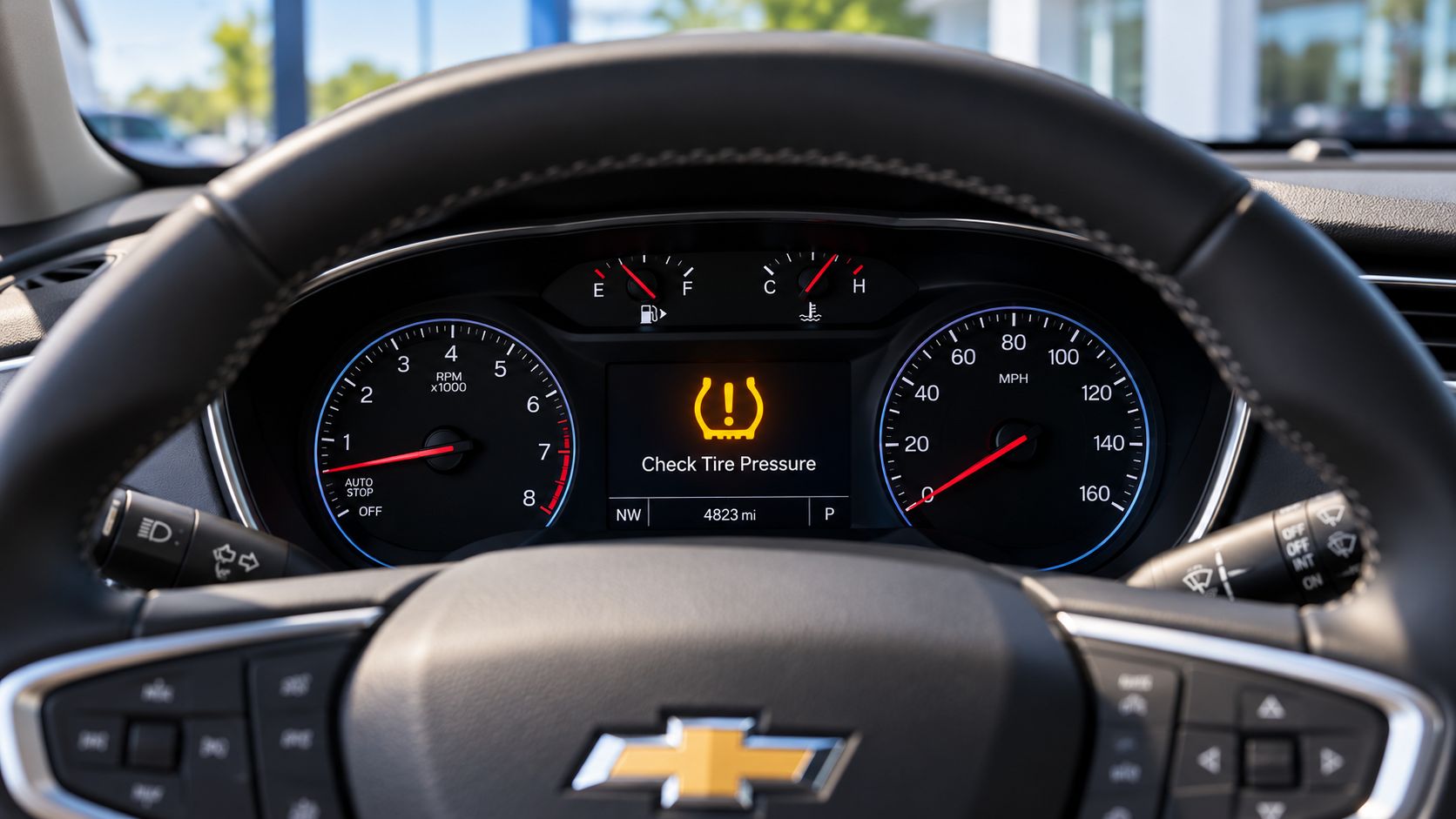
Your Chevrolet's tire pressure warning light may appear during your morning commute, after hitting a pothole, or when you start your vehicle after it's been parked overnight.
Whatever the reason, it's a warning worth checking.
The tire pressure light typically indicates that at least one tire is significantly underinflated. In some cases, a flashing warning light can indicate a problem with the Tire Pressure Monitoring System (TPMS) itself.
At Cutter Chevrolet, we help Honolulu drivers maintain their Chevrolet vehicles through our service department, including tire-related maintenance.
Here's how to understand the warning, check your tires, and decide when professional attention is needed.
What Does the Tire Pressure Warning Light Mean on a Chevy?
Your Chevrolet's Tire Pressure Monitoring System helps alert you when one or more tires have significantly low air pressure.
The warning usually appears as a yellow or amber symbol shaped like a tire cross-section with an exclamation point.
Depending on your Chevrolet model and equipment, the dashboard may also display a message such as "Check Tire Pressure," "Low Tire Pressure," or "Add Air to Tire."
The meaning depends partly on how the warning behaves.
| Warning behavior | Possible meaning | Recommended action |
|---|---|---|
| Solid tire pressure light | One or more tires have low pressure | Check all tire pressures and inspect for damage |
| Light flashes, then stays on | Possible TPMS malfunction | Arrange diagnostic service |
| Light appears after the vehicle has been parked | Pressure may have dropped while the tires cooled | Check pressure with a gauge |
| Light remains on after adding air | Pressure may still be incorrect, a tire may be leaking, or the system may need attention | Recheck pressures and consult the owner's manual |
Chevrolet explains these warning behaviors in its official tire maintenance guidance.
Remember that TPMS is a warning system, not a replacement for regular tire inspections.
What Should You Do When Your Chevy Tire Pressure Light Comes On?
If the warning appears while driving around Honolulu, follow these steps.
1. Find a Safe Place to Stop
Avoid ignoring the warning until your next scheduled maintenance visit.
Find a safe parking area and inspect your tires.
Look for:
- A tire that appears noticeably flat
- Nails or other objects embedded in the tread
- Sidewall cuts, bulges, or visible damage
- Signs that a tire is losing air
If a tire is flat, visibly damaged, or the vehicle is difficult to control, do not continue driving on it. Arrange appropriate roadside assistance.
A damaged or severely underinflated tire can compromise handling and may fail while driving.
2. Check the Recommended Tire Pressure
Find the Tire and Loading Information label, typically located on the driver's door jamb.
This label identifies the vehicle manufacturer's recommended cold tire pressure.
Do not use the maximum pressure printed on the tire's sidewall as your normal inflation target.
That sidewall number is not necessarily the pressure recommended for your vehicle.
The National Highway Traffic Safety Administration's tire safety guide explains how to locate the correct information and measure tire pressure.
3. Measure Pressure With a Tire Gauge
Use a reliable tire pressure gauge to check each tire.
For the most accurate measurement, check when the tires are cold, generally before driving or after the vehicle has been parked for at least three hours.
Compare the readings with your vehicle's recommended pressures.
Don't assume every tire should use the same pressure. Some vehicles have different front and rear requirements.
4. Add Air if Needed
If a tire is underinflated and has no visible damage that makes inflation unsafe, add air to the manufacturer's recommended level.
After correcting the pressures, follow your Chevrolet owner's manual for any additional instructions.
On many Chevrolet models, driving afterward allows the monitoring system to update and the warning to turn off.
If the warning remains illuminated, recheck the pressure before assuming the system is defective.
Why Does Your Chevy Tire Pressure Light Keep Coming On?
A tire pressure warning that repeatedly returns deserves further investigation.
Several different conditions can cause the same warning.
A Slow Tire Leak
A nail, damaged valve, or problem at the tire bead can cause gradual air loss.
You may be able to inflate the tire temporarily, only to see the warning return after additional driving.
If one tire repeatedly loses pressure, have it inspected rather than continuing to refill it without finding the cause.
Changes in Tire Temperature
Tire pressure changes with temperature.
Even in Hawaii's generally warm climate, cooler overnight conditions can reduce the pressure inside your tires.
If the tires were already close to the warning threshold, that change may be enough to trigger the dashboard light.
The warning might disappear as the tires warm, but you should still check the pressure.
Tire or Wheel Damage
A pothole, curb impact, or road debris can damage a tire or wheel.
Damage isn't always visible from a quick glance.
If the warning appears after an impact, inspect the tire and wheel carefully. Seek professional service when damage is suspected.
A Tire Pressure Monitoring System Problem
Your TPMS relies on electronic components to communicate tire-pressure information.
Depending on the model, a malfunction can involve a sensor, its battery, or communication with the vehicle.
Chevrolet notes that a tire pressure light flashing for approximately one minute before remaining illuminated may indicate a system malfunction requiring diagnostic service.
Correcting the tire pressure alone may not resolve this type of warning.
Can You Drive With the Tire Pressure Light On?
That depends on the tire's actual condition.
A warning light doesn't tell you whether the tire has a minor pressure difference or a more serious problem.
If the tire is visibly flat, damaged, or rapidly losing pressure, do not keep driving.
If all tires appear intact, stop in a safe location and check their pressures with a gauge.
Driving on significantly underinflated tires can increase the risk of tire failure and affect vehicle handling.
It may also contribute to uneven tread wear and reduced fuel efficiency.
The safest response is to identify the cause of the warning before resuming normal driving.
What if the Tire Pressure Light Won't Turn Off After Adding Air?
Sometimes the warning remains illuminated even after a driver has added air.
Before assuming your vehicle needs a new TPMS sensor, check a few details.
Confirm that you used the correct tire pressure.
The pressure listed on your door-jamb label is the reference point, not the tire sidewall maximum.
Recheck all tires.
One tire may have been overlooked or may have lost air again.
Consider whether the tires were warm.
Air pressure measured after driving may differ from a cold reading.
Follow your model-specific instructions.
Some Chevrolet systems update after driving. Procedures may differ by model and year, particularly following tire rotation or sensor replacement.
Pay attention to a flashing warning.
If the light flashes and then stays on, a TPMS malfunction may be present.
When the cause isn't clear, having the system checked is more useful than repeatedly adding air without confirming the pressure.
How Often Should You Check Tire Pressure in Hawaii?
We recommend following Chevrolet's maintenance guidance and your vehicle owner's manual.
As a general practice, check tire pressures at least once a month, even when the dashboard warning is off.
The National Highway Traffic Safety Administration also recommends regular pressure checks because TPMS alerts may not activate until a tire is significantly underinflated.
For Oahu drivers, make tire inspection part of your normal maintenance routine, particularly after encountering road debris or potholes.
Check for:
- Correct cold tire pressure
- Uneven tread wear
- Cuts or sidewall damage
- Objects embedded in the tread
- Unusual vibration while driving
Tire pressure is only one aspect of tire maintenance.
Tread depth, alignment, balancing, and tire rotation also affect vehicle handling and tire performance.
When Should You Schedule Tire Service in Honolulu?
Consider scheduling an inspection when:
- Your tire pressure warning repeatedly returns
- A tire continues losing air after inflation
- The dashboard indicates a TPMS malfunction
- You notice unusual tire wear
- You've encountered a pothole or curb impact and suspect damage
- You need help determining whether a tire can be repaired or requires replacement
At Cutter Chevrolet, our service department provides Chevrolet maintenance and repair support, including tire-related services.
We also offer tire sales and vehicle-specific tire lookup resources.
If you're uncertain about the warning, our Chevrolet service center is a useful starting point.
You can also review Chevrolet's Tire Finder and tire maintenance resources for guidance on tire selection and care.
For tire replacement or other relevant components, our parts department provides an online parts request form.
Get Chevrolet Tire Service at Cutter Chevrolet in Honolulu
A tire pressure warning is your opportunity to check an important part of your vehicle's safety and performance.
Whether your Chevrolet needs pressure correction, a tire inspection, or further diagnosis of a TPMS warning, understanding the cause is the first step.
We're located at 711 Ala Moana Blvd, Honolulu, HI 96813.
Our service department operates Monday through Friday, from 7:00 AM to 5:00 PM, and is closed on weekends.
You can request a Chevrolet service appointment online or contact our service team at (808) 374-2096.
We're here to help you understand your Chevrolet's maintenance needs and get the appropriate service for your vehicle.
Categories:
New Inventory