



How to Trade In Your Car in Honolulu: Value, Preparation & Next Steps
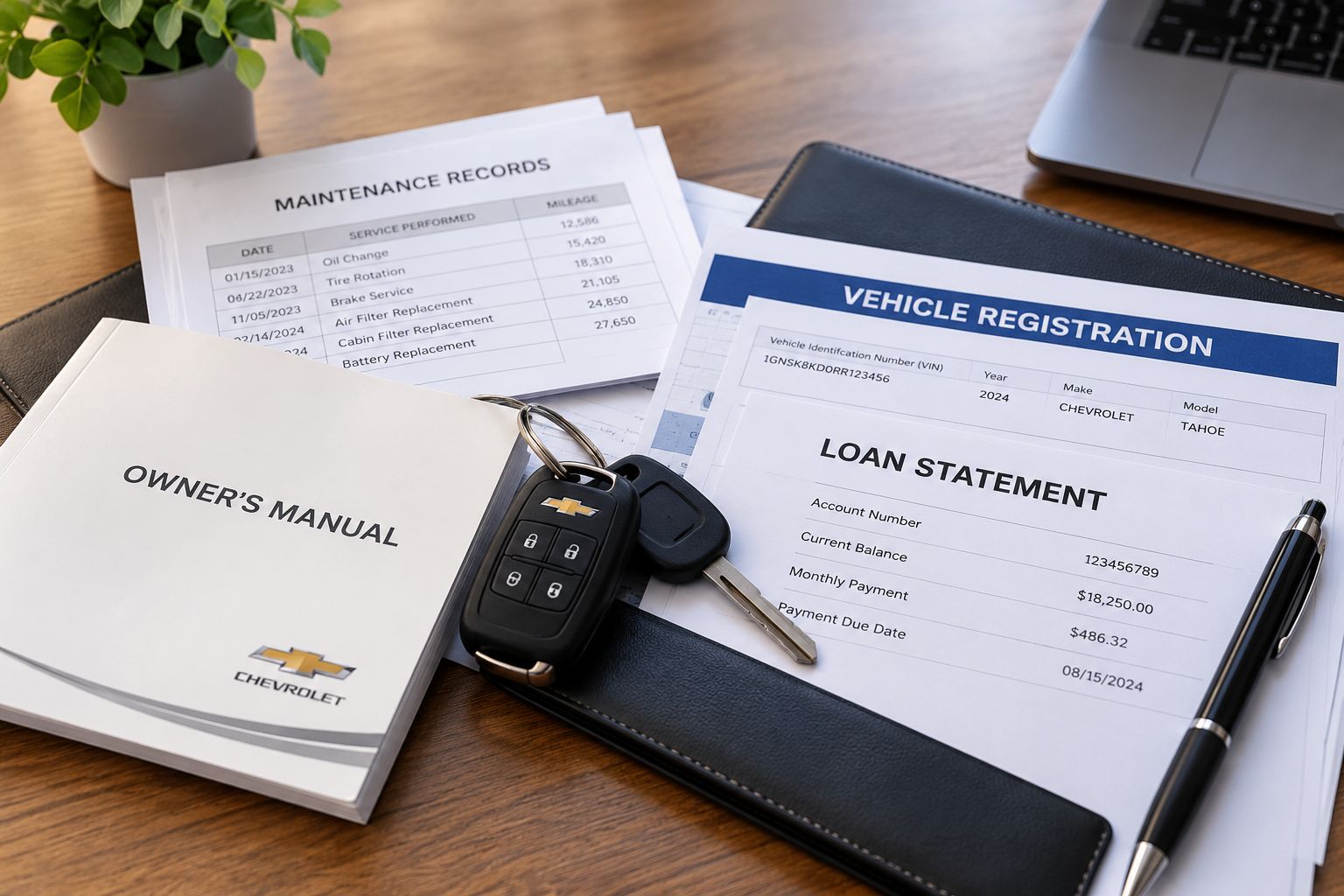
Trading in your car can make your next vehicle purchase simpler, but knowing what your current vehicle is worth is an important first step.
If you're considering a trade-in in Honolulu, you probably have several questions. How is your car's value determined? Can you trade in a vehicle you're still financing? Should you repair minor damage before getting an appraisal?
At Cutter Chevrolet, we help Honolulu drivers explore their vehicle options through our trade-in appraisal process and financing resources. Whether you're moving into a larger SUV or replacing an older commuter, we'll help you understand the information involved in evaluating your trade.
Here's what to know before getting started.
How Does Trading In a Car Work in Honolulu?
A trade-in allows you to put the agreed-upon value of your current vehicle toward another vehicle purchase.
The process typically begins with an appraisal, followed by a review of any outstanding loan balance and the terms of your next purchase.
At our Honolulu dealership, you can begin by completing our online trade-in appraisal form.
The form requests information about your vehicle, including its year, make, model, mileage, condition, and ownership history.
After submitting your details, our team can review the information and discuss the next steps.
A trade-in generally involves these stages:
- Provide your vehicle information. Share accurate details about its mileage, features, condition, and history.
- Review the appraisal. Understand the proposed trade-in value and any factors affecting it.
- Check your loan balance. If you're still financing the vehicle, establish how much you owe.
- Explore replacement vehicles. Compare options that suit your driving needs and budget.
- Review the full transaction. Confirm the trade-in allowance, loan payoff, purchase details, and financing terms before signing.
An initial estimate is a useful starting point. The final amount may depend on a physical evaluation and the dealership's offer.
What Determines Your Car's Trade-In Value in Hawaii?
A car's trade-in value isn't based on age or mileage alone.
Market demand, mechanical condition, vehicle history, and equipment can all influence an appraisal.
Mileage and Vehicle Age
Mileage helps indicate how extensively a vehicle has been used.
However, two vehicles of the same year and model can receive different appraisals because of their maintenance histories and overall condition.
A vehicle with higher mileage isn't automatically a poor trade-in candidate.
Mechanical and Exterior Condition
An appraisal may consider:
- Engine and transmission operation
- Brake and tire condition
- Body damage and paint condition
- Interior wear
- Working accessories and electronics
- Evidence of rust or corrosion
For Hawaii drivers, exposure to coastal environments is another practical consideration.
Salt air and moisture can contribute to corrosion, particularly when vulnerable vehicle components aren't maintained.
Keeping records of maintenance and repairs can help provide context about your vehicle's condition.
Accident and Ownership History
Previous accidents, repairs, title status, and ownership history may affect the vehicle's marketability.
Our appraisal form asks about previous accidents, paintwork, title history, and existing damage.
Providing accurate answers helps establish a clearer picture of the vehicle you're considering trading.
Local Market Demand
Vehicle values also reflect what buyers are looking for.
Demand for a particular truck, SUV, or commuter car can vary by market and over time.
Rather than relying on a national estimate alone, use a local appraisal to understand how your vehicle may be valued in Honolulu.
Can You Trade In a Car That Still Has a Loan?
Yes, a vehicle can generally be traded in before its loan is fully paid off.
The important question is how the outstanding loan balance compares with the vehicle's trade-in value.
When Your Trade-In Is Worth More Than You Owe
If your vehicle is worth more than the remaining loan balance, you have positive equity.
For example, suppose your vehicle receives an appraisal of $20,000 and your outstanding loan payoff is $15,000.
The difference is $5,000 in positive equity.
That amount may be applied toward your replacement vehicle, subject to the final transaction terms.
When You Owe More Than Your Vehicle Is Worth
If the loan payoff exceeds the trade-in value, you have negative equity.
For example, a vehicle valued at $15,000 with an $18,000 loan payoff would have $3,000 in negative equity.
Depending on lender approval and transaction terms, you may need to pay that difference or explore whether it can be included in another loan.
Rolling negative equity into a new loan increases the amount financed and can raise total borrowing costs.
Before agreeing to a replacement vehicle, ask for a clear explanation of how your existing loan will be handled.
Our finance department can help you explore financing options, subject to lender requirements and approval.
How to Prepare Your Car for a Trade-In Appraisal
Preparation helps make the appraisal process more straightforward.
You don't necessarily need to spend money on repairs before getting an estimate. Start by understanding your vehicle's condition.
Clean and Organize Your Vehicle
Remove personal belongings and clean the interior so its condition is easy to assess.
A basic wash can also make exterior damage easier to identify.
Avoid assuming that expensive detailing will automatically increase your trade-in value enough to recover its cost.
Gather Important Documents
Before visiting, consider preparing:
- Vehicle registration
- Title or ownership information
- Driver's license or other required identification
- Current loan payoff information, if applicable
- Maintenance and repair records
- Available keys and remotes
If your lender holds the title, ask about the documentation needed to complete the transaction.
You can also review the Hawaii Department of Customer Services for local motor vehicle information.
Be Transparent About Vehicle Condition
Disclose known mechanical problems, previous accidents, and existing damage.
Our trade-in appraisal form includes questions about these details.
Accurate information helps reduce misunderstandings when the vehicle is evaluated in person.
Should You Trade In Your Car or Sell It Privately?
Both approaches have advantages.
A private sale may produce a higher selling price, but it also requires you to manage advertising, buyer communication, payment arrangements, and ownership-transfer paperwork.
A dealership trade-in can reduce the number of separate transactions involved in replacing your vehicle.
| Consideration | Dealership Trade-In | Private Sale |
|---|---|---|
| Vehicle valuation | Dealership appraisal | Seller sets asking price |
| Finding a buyer | Dealer evaluates vehicle | Seller handles inquiries |
| Negotiation | Discuss trade-in offer | Negotiate with individual buyers |
| Existing loan | Payoff handled within transaction arrangements | Loan and lien clearance must be coordinated |
| Replacement purchase | Can be coordinated with vehicle purchase | Usually a separate transaction |
If your priority is convenience, a trade-in may be worth considering.
If maximizing the selling price is more important and you have time to manage the process, a private sale may be worth exploring.
Compare the actual amounts and obligations before deciding.
Choosing Your Next Vehicle After a Trade-In
Once you understand your vehicle's potential trade-in value, you can consider what you want from your next car.
For Oahu drivers, the decision often starts with everyday use.
A compact SUV may be practical for commuting and parking in Honolulu. A larger SUV might better suit a household that regularly travels with several passengers. A pickup may be appropriate for drivers who frequently transport equipment.
We offer new Chevrolet vehicles and pre-owned models from multiple manufacturers.
You can explore our pre-owned vehicle inventory and review available models before visiting.
When comparing options, consider the total purchase cost rather than focusing only on the monthly payment.
Our vehicle payment calculator can help you explore estimated payments using different financing assumptions. Its results are estimates, not financing offers or approval decisions.
You can also request a test drive when you've identified a vehicle you'd like to experience.
Start Your Car Trade-In in Honolulu
Trading in your car starts with understanding its condition, estimated value, and any remaining loan obligations.
You don't need to choose your next vehicle before beginning that research.
At Cutter Chevrolet, we're located at 711 Ala Moana Blvd, Honolulu, HI 96813, where you can discuss your vehicle needs and explore our new and pre-owned options.
Start with our online trade-in appraisal form, or contact our team if you have questions about the process.
We'll help you understand your options so you can make a more informed decision about your next vehicle.
Categories:
New Inventory